




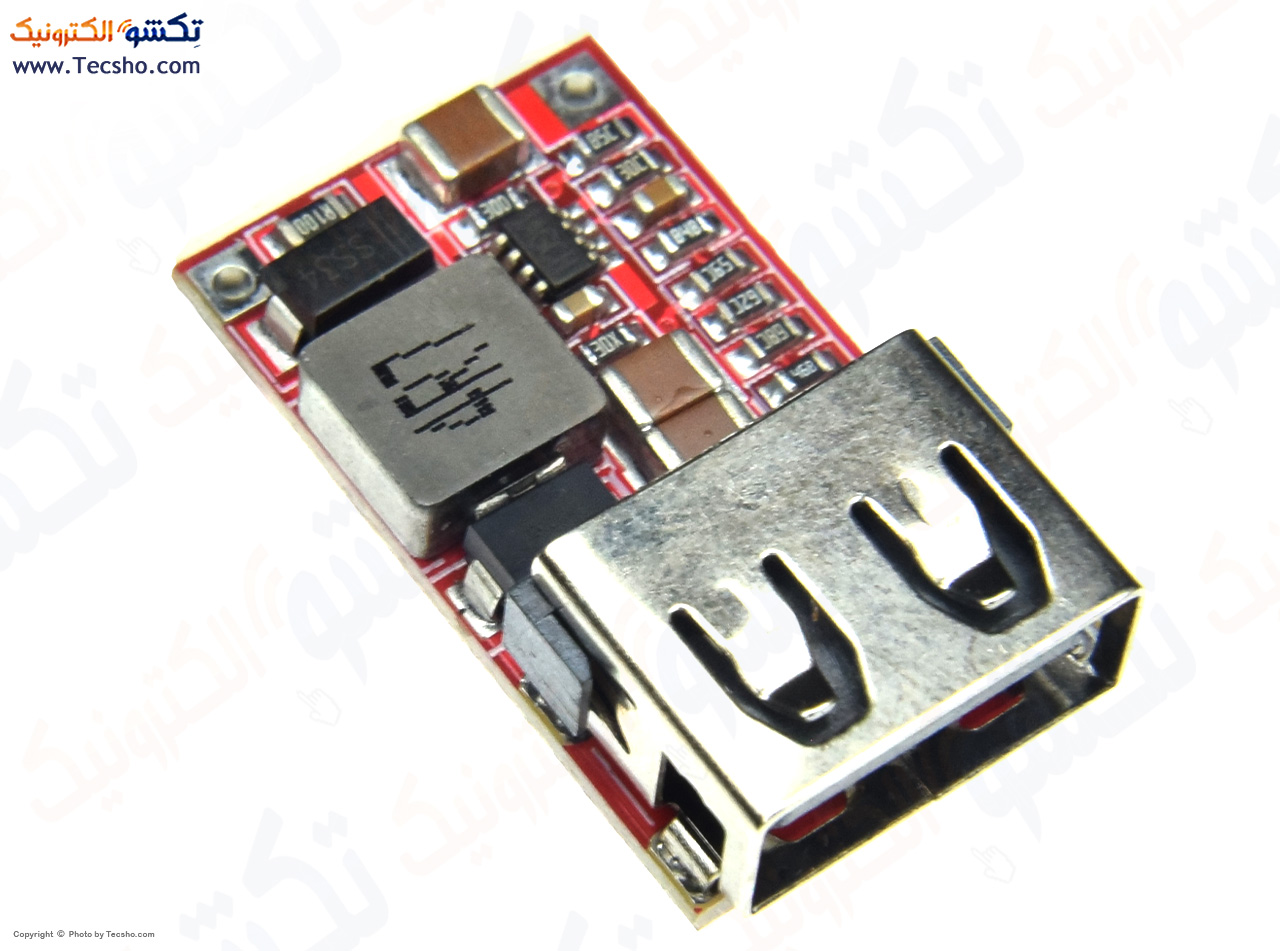
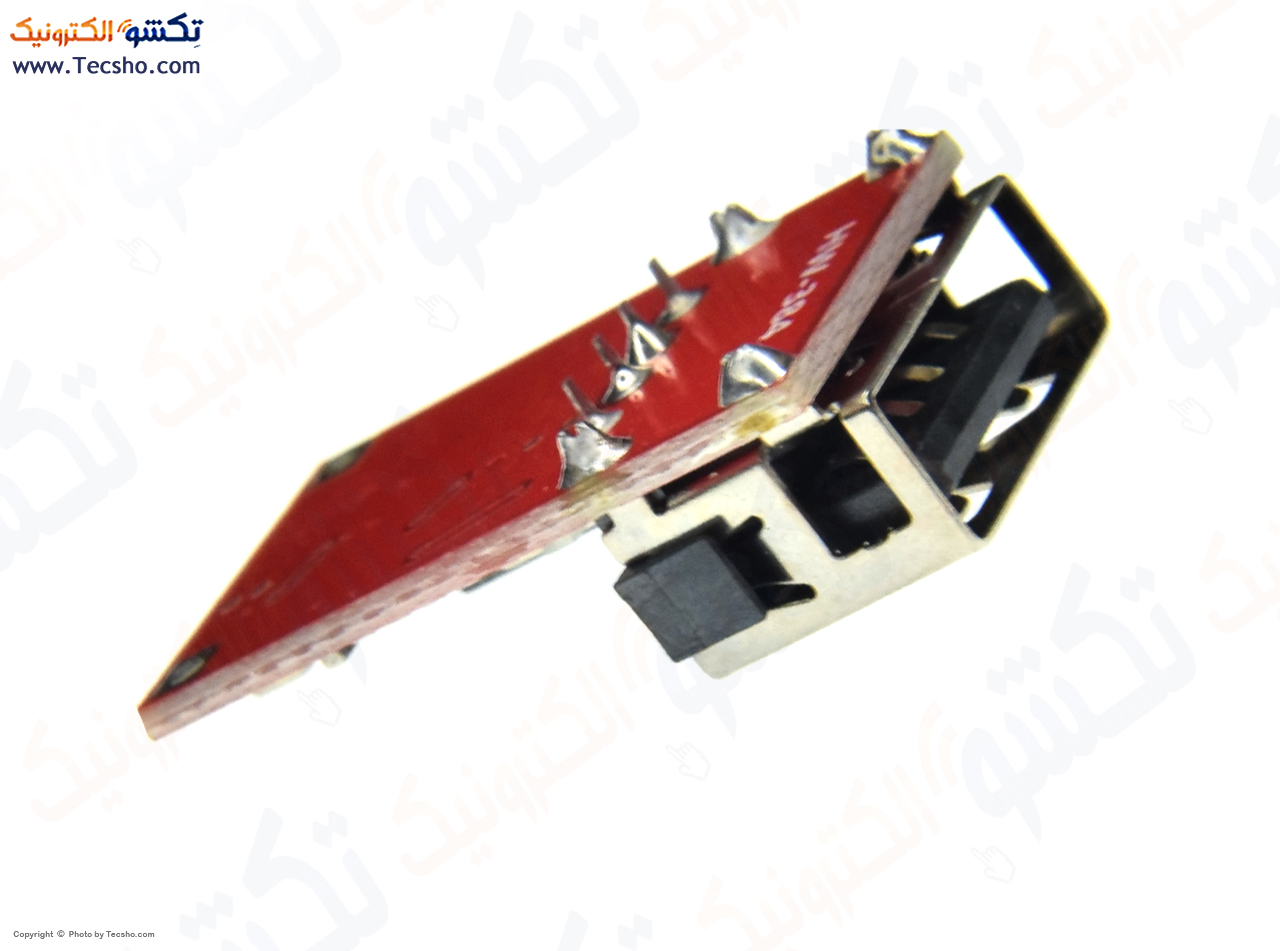
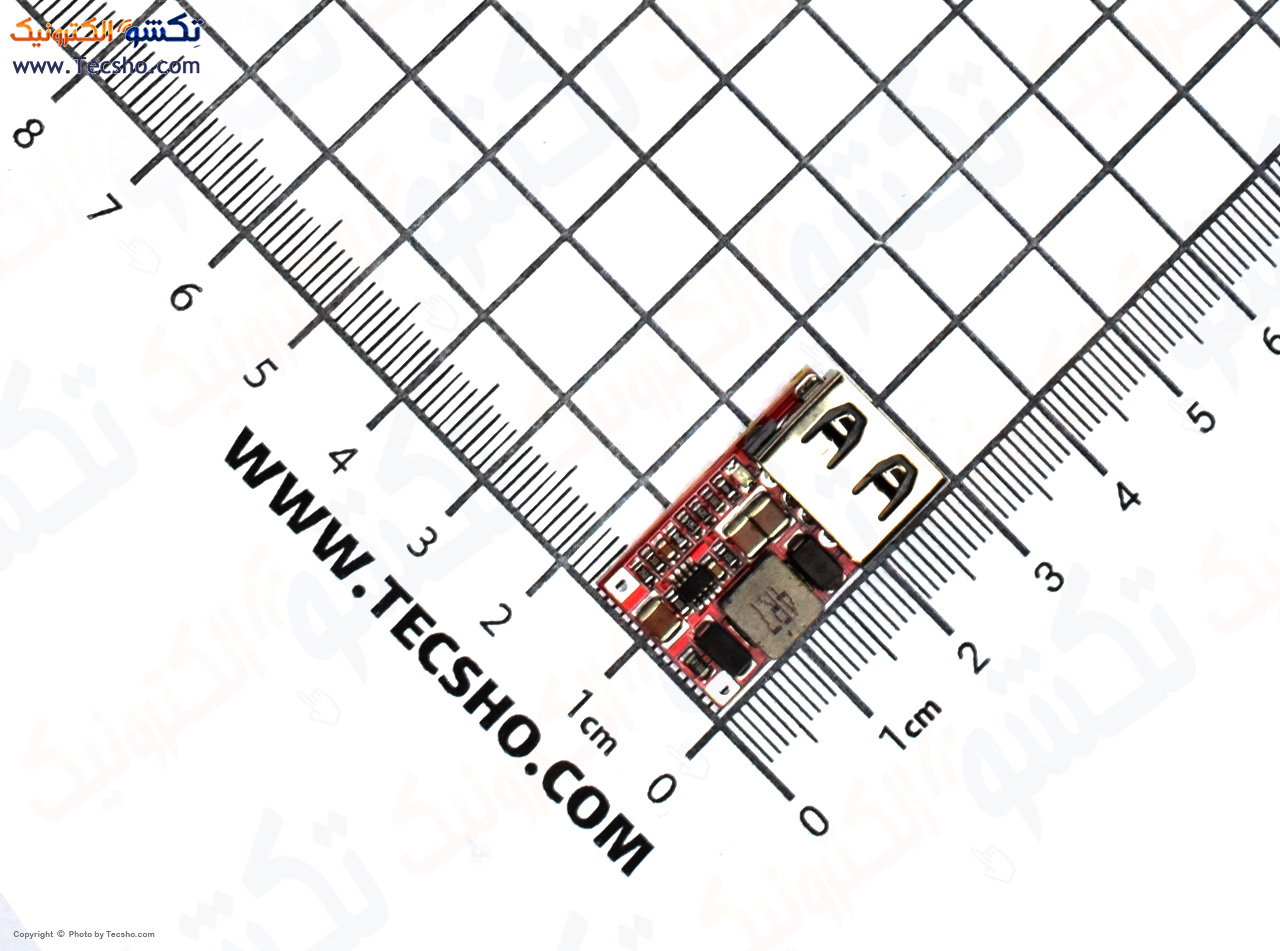
مشخصات ماژول DC-DC کاهنده 3 آمپر MP2315 با خروجی USB
معرفی ماژول کاهنده ولتاژ MP2315
ماژول کاهنده ولتاژ MP2315 یک مدار کاهنده ولتاژ (Step-Down Converter) است که به طور خاص برای تولید ولتاژ 5 ولت پایدار و با کیفیت برای تغذیه دستگاههای USB طراحی شده است. این ماژول به شما امکان میدهد ولتاژهای بالاتر (6 ولت تا 24 ولت) را به ولتاژ 5 ولت مورد نیاز برای شارژ موبایل، پاوربانک، یا تغذیه سایر دستگاههای USB تبدیل کنید. MP2315 به دلیل کارایی بالا، اندازه کوچک و قابلیت اطمینان، در بین طراحان و سازندگان دستگاههای الکترونیکی بسیار محبوب است.
ویژگیهای کلیدی ماژول MP2315
رنج ولتاژ ورودی گسترده: ولتاژ ورودی این ماژول معمولاً از 6 ولت تا 24 ولت قابل قبول است، که انعطافپذیری بالایی را برای استفاده در پروژههای مختلف فراهم میکند.
ولتاژ خروجی ثابت: MP2315 ولتاژ خروجی 5 ولت را با دقت بالا (معمولاً با تلورانس ±1%) ارائه میدهد. این امر تضمین میکند که دستگاههای USB شما به طور ایمن و با کارایی بهینه تغذیه میشوند.
جریان خروجی بالا: این ماژول قادر است جریان خروجی تا 3 آمپر را فراهم کند، که برای شارژ سریع دستگاههای USB کافی است.
بازدهی بالا: MP2315 دارای بازدهی بالایی است (معمولاً بالای 97%)، که به معنای اتلاف انرژی کمتر و عمر قطعات طولانیتر در پروژههای شما است.
حفاظت داخلی: این ماژول معمولاً دارای حفاظتهایی مانند حفاظت در برابر اتصال کوتاه (Short Circuit Protection)، حفاظت در برابر جریان بیش از حد (Overcurrent Protection) و حفاظت در برابر گرمای بیش از حد (Overtemperature Protection) است.
دارای نشانگر LED برای نمایش وضعیت ماژول.
اندازه کوچک: MP2315 یک ماژول جمع و جور است که به راحتی در پروژههای مختلف قابل استفاده است.
فرکانس سوئیچینگ بالا: فرکانس سوئیچینگ بالا باعث کاهش نویز و بهبود پایداری ولتاژ خروجی میشود.
کاربردهای ماژول MP2315
شارژر USB: میتوان از MP2315 برای ساخت شارژرهای USB با ولتاژ ورودی بالاتر (مانند 12 ولت یا 24 ولت) استفاده کرد.
تغذیه دستگاههای الکترونیکی: MP2315 میتواند برای تغذیه دستگاههای الکترونیکی مختلف که به ولتاژ 5 ولت USB نیاز دارند، استفاده شود.
پروژههای DIY: این ماژول یک گزینه عالی برای پروژههای DIY (خود ساخت) و ساخت دستگاههای سفارشی است.
سیستمهای خودرویی: برای تغذیه دستگاههای USB در خودروها، MP2315 میتواند ولتاژ 12 ولت خودرو را به 5 ولت USB تبدیل کند.
نحوه استفاده از ماژول MP2315
VIN+: اتصال به ولتاژ ورودی مثبت (6 ولت تا 24 ولت).
GND: اتصال به ولتاژ ورودی منفی
پورت USB خروجی است
P2315 3A DC-DC Buck Converter Module with USB Output – 12V to 5V Step-Down
The MP2315 3A DC-DC buck converter module is a compact and highly efficient switching regulator designed to step down a higher DC input voltage to a lower, stable and adjustable output. Based on the MP2315 synchronous buck regulator IC, this module offers up to 3 A output current in a very small footprint, making it ideal for modern embedded and DIY electronics projects.
Overview and typical applications
This module operates as a DC-DC buck (step-down) converter. Using the on-board trimmer potentiometer, you can easily adjust the output voltage within the specified range, allowing you to power a wide variety of loads from a single higher-voltage source. The MP2315 buck module is widely used to power Arduino boards, Raspberry Pi, wireless modules, sensors, small DC motors, LED strips and different microcontroller-based circuits.
In many designs, the main power source may be 12 V, 24 V or even higher, while control circuits and digital modules typically require 5 V, 3.3 V or other low voltages. Linear regulators in such scenarios waste a lot of power as heat. In contrast, switching converters like the MP2315, with their high efficiency, significantly reduce power loss and heat generation and improve the overall performance of the power supply stage.
Key features and specifications
-
Topology: DC-DC buck (step-down) converter
-
Controller IC: MP2315 synchronous buck regulator
-
Output current: up to 3 A (with proper cooling and layout)
-
Input voltage: accepts a wide DC input range (commonly up to around 24 V, depending on module version)
-
Output voltage: adjustable via on-board potentiometer (e.g. from about 1.2 V up to near the input voltage)
-
High efficiency: typically up to about 95% under optimal conditions
-
Compact PCB size suitable for space-constrained designs
-
Protection features (depending on module design): short-circuit, over-current and thermal shutdown
Thanks to its high switching frequency and synchronous rectification, the MP2315 offers better efficiency and a smaller overall solution size compared to older buck modules such as those based on the LM2596.
Advantages over linear regulators and older buck modules
-
High efficiency and low heat dissipation
Linear regulators dissipate the voltage drop as heat. For example, converting 12 V down to 5 V at 1 A results in roughly 7 W of heat in a linear regulator. With a high-efficiency switching converter like the MP2315, losses are dramatically reduced, and heat sinks can often be smaller or even unnecessary.
-
Compact size and high power density
The MP2315 operates at a relatively high switching frequency, enabling the use of smaller inductors and capacitors. This results in a compact DC-DC module suitable for densely populated PCBs and portable devices.
-
Stable and low-ripple output
With proper feedback circuitry, inductor and capacitors, the MP2315 module provides a stable and low-ripple output voltage, which is important for powering sensitive digital ICs, microcontrollers, communication modules (such as GSM/GPS) and precision sensors.
-
Adjustable output voltage
The on-board potentiometer allows fine tuning of the output voltage. Simply connect a multimeter to the output terminals and adjust the trimmer until you reach the desired voltage (e.g. 3.3 V, 5 V, 9 V, etc.), then connect your actual load.
How to use the MP2315 buck converter module
-
Connect the input:
Connect VIN+ and VIN- pins to your DC power source (e.g. 12 V or 24 V adapter). Observe correct polarity to avoid damaging the module.
-
Connect the output:
Connect VOUT+ and VOUT- pins to your load or target circuit.
-
Adjust the output voltage:
Before connecting sensitive loads, power up the module and measure the output with a multimeter. Rotate the on-board potentiometer until you get the required output voltage. Once set, you can safely connect your load.
-
Respect current and thermal limits:
When operating near the 3 A limit, it is important to ensure adequate airflow and cooling. Adding a small heat sink or providing good ventilation will improve reliability and lifetime.
Typical applications
-
Adjustable bench-top DC-DC power supply
-
Powering Arduino, ESP8266, ESP32, AVR, ARM and other microcontroller boards from higher voltage sources
-
Supplying Raspberry Pi and other SBCs from 12 V or 24 V inputs
-
Driving LED strips, fans and small DC motors
-
Converting automotive battery voltage (12 V / 24 V) down to 5 V or 9 V for chargers and accessories
-
Use in solar power systems as an intermediate DC-DC stage between panels, batteries and loads
-
Replacing inefficient linear regulators in existing designs to reduce heat and improve efficiency
Buying considerations
-
Component quality:
Pay attention to the quality of the inductor, capacitors and soldering. High-quality modules handle higher currents more reliably and generate less heat.
-
Realistic current rating:
Some modules specify 3 A as peak rather than continuous current. For continuous operation, it is often recommended to use about 60–70% of the rated current to ensure safe and long-term operation.
-
Input voltage range:
Always check the allowed input voltage range of the specific MP2315 module you purchase to avoid damaging the IC.
Conclusion
The MP2315 3A DC-DC buck converter module is a powerful and cost-effective solution for voltage conversion and regulation in many electronic projects. With its high efficiency, compact size, adjustable output and up to 3 A output current, it is an excellent choice for powering Arduino and Raspberry Pi boards, communication modules, LED lighting and many other loads. If you need a reliable and space-saving DC-DC converter for your next design, the MP2315 buck module is a very strong candidate.

دیدگاه ها
هیچ دیدگاهی برای این محصول نوشته نشده است.